The C Programming Language
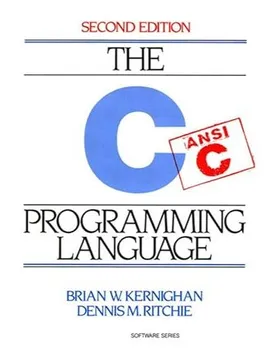
The C Programming Language by Brian Kernighan and Dennis Ritchie is one of the most influential programming books ever written. Often called “K&R”, it was written by the creators and early architects of the C language and became the definitive reference for generations of programmers.
What the book is about
Section titled “What the book is about”The book teaches the C programming language from first principles and explains how to write clear, efficient, and reliable software. It covers:
- Basic syntax and program structure
- Data types, operators, and expressions
- Control flow (if, switch, for, while)
- Functions and modular design
- Pointers and memory manipulation
- Arrays and strings
- Structures and unions
- Input/output operations
- The C standard library
- Elements of UNIX system programming
Unlike many modern programming books, it is concise and heavily focused on practical programming through carefully chosen examples and exercises.
Core takeaway
Section titled “Core takeaway”The deepest lesson of the book is not merely how to write C. It teaches how computers actually work and encourages a disciplined approach to software engineering.
1. Understand the Machine
Section titled “1. Understand the Machine”C exposes many low-level concepts directly:
- Memory addresses
- Pointers
- Data representation
- Function calls
- Resource management
As a result, programmers gain a stronger mental model of what happens beneath higher-level languages.
2. Simplicity Over Complexity
Section titled “2. Simplicity Over Complexity”The authors consistently promote:
- Small functions
- Clear logic
- Minimal abstraction
- Readable code
The examples demonstrate that elegant solutions are usually simpler than complicated ones.
3. Efficiency Matters
Section titled “3. Efficiency Matters”The book was written when computing resources were limited. Consequently, it teaches programmers to think about:
- Memory usage
- Algorithm efficiency
- Runtime costs
This mindset remains valuable even with today’s powerful hardware.
4. Programming Is About Problem Solving
Section titled “4. Programming Is About Problem Solving”The exercises are designed to develop:
- Analytical thinking
- Decomposition of problems
- Incremental program construction
The language itself becomes a vehicle for learning sound engineering practices.
Why it matters
Section titled “Why it matters”Historical Importance
Section titled “Historical Importance”C became the foundation for much of modern software development. The book helped popularise and standardise the language. For many years, it was considered the authoritative reference on C.
Influence on Modern Languages
Section titled “Influence on Modern Languages”Many modern languages inherit concepts directly from C, including:
- C++
- Objective-C
- Java
- JavaScript
- C#
- Go
- Rust (to some extent in systems concepts)
Understanding C makes it easier to understand the design decisions behind these languages.
Foundation for Systems Programming
Section titled “Foundation for Systems Programming”Much of the software ecosystem has roots in C:
- Operating systems
- Compilers
- Embedded systems
- Networking software
- Databases
Even today, critical components of Linux, Windows, and countless embedded devices are written in C.
Teaches Timeless Engineering Principles
Section titled “Teaches Timeless Engineering Principles”Although the book was published decades ago, its lessons about:
- Code clarity
- Correctness
- Efficiency
- Modularity
Remain relevant regardless of programming language.