The C++ Programming Language
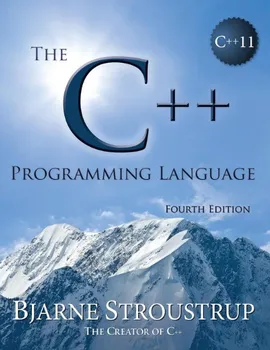
The C++ Programming Language by Bjarne Stroustrup is one of the most influential books in software engineering. It is particularly significant because it was written by the creator of C++ himself and has long been considered the definitive reference for understanding the language and its design philosophy.
What the book is about
Section titled “What the book is about”The book is a comprehensive guide to the C++ language, covering:
- Core language features and syntax
- Object-Oriented Programming (OOP)
- Generic programming using templates
- The Standard Library
- Memory management
- Exception handling
- Type systems and abstractions
- Concurrency and modern C++ features (in the 4th edition, which covers C++11)
Unlike many programming books that focus primarily on language syntax, Stroustrup explains why C++ was designed the way it was and how to use its features effectively to build efficient, maintainable, and scalable software.
Core takeaway
Section titled “Core takeaway”If I had to reduce the entire book to a single idea, it would be:
Use abstraction to manage complexity without sacrificing performance.
This principle appears throughout the book.
Stroustrup argues that:
- Software becomes difficult because of complexity.
- Good abstractions help hide unnecessary details.
- Abstractions should not impose significant runtime cost.
- C++ provides mechanisms that allow developers to write high-level code while maintaining low-level control when necessary.
Examples include:
- Classes for modelling real-world concepts
- Templates for reusable and type-safe code
- RAII (Resource Acquisition Is Initialization) for safe resource management
- The Standard Library for leveraging proven abstractions instead of reinventing solutions
A recurring theme is:
“You should pay only for what you use.”
This philosophy is often referred to as the zero-overhead principle, a cornerstone of C++ design.
Why it matters
Section titled “Why it matters”1. It Teaches the Philosophy Behind C++
Section titled “1. It Teaches the Philosophy Behind C++”Many developers learn C++ syntax but never understand:
- Why templates exist
- Why constructors and destructors work the way they do
- Why resource management is so central
- Why the language supports multiple programming paradigms
This book explains the reasoning behind those decisions.
2. It Promotes Professional Programming Practices
Section titled “2. It Promotes Professional Programming Practices”The book consistently encourages:
- Strong type safety
- Encapsulation
- Resource ownership
- Generic programming
- Reusable designs
- Error handling through exceptions
These ideas lead to more robust software systems.
3. It Explains Multiple Programming Paradigms
Section titled “3. It Explains Multiple Programming Paradigms”C++ is unusual because it supports:
- Procedural programming
- Object-oriented programming
- Generic programming
- Functional-style techniques
The book demonstrates when each paradigm is appropriate instead of presenting a one-size-fits-all approach.
4. It Bridges High-Level Design and Low-Level Systems Programming
Section titled “4. It Bridges High-Level Design and Low-Level Systems Programming”One of C++‘s biggest strengths is that it can be used for:
- Operating systems
- Game engines
- Embedded systems
- Databases
- Real-time applications
- Large enterprise systems
The book teaches how to think at both levels:
- Architectural design
- Machine-level efficiency
This combination is rare among programming languages.
5. It Helps You Think Like a Language Designer
Section titled “5. It Helps You Think Like a Language Designer”An underrated benefit of reading Stroustrup is that you start to understand:
- Trade-offs in language design
- Backward compatibility challenges
- Performance versus usability decisions
- API and library design principles
Even if you never become a C++ specialist, these lessons improve your skills in any language.
Key Lessons Worth Remembering
Section titled “Key Lessons Worth Remembering”Abstraction is Essential
Large systems become manageable only when complexity is hidden behind good interfaces.
Resource Management Must Be Explicit
Memory, files, sockets, and threads should have clear ownership and lifecycle management.
Generic Code Is Powerful
Templates allow writing reusable code without sacrificing performance.
Performance Matters
Efficient software is often a design problem rather than a micro-optimization problem.
Use the Standard Library
Professional developers should prefer tested library components over custom implementations whenever possible.