The Clean Coder
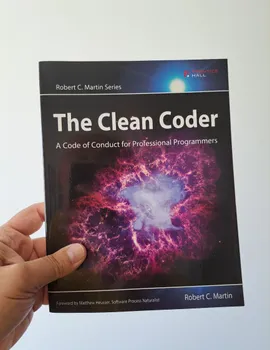
The Clean Coder: A Code of Conduct for Professional Programmers by Robert C. Martin (“Uncle Bob”) is one of the most influential books on software craftsmanship and professional software development.
Unlike Clean Code, which focuses on writing better code, The Clean Coder focuses on being a professional software developer. The book is about mindset, behaviour, discipline, ethics, communication, accountability, and the habits expected from a true software professional.
What the book is about
Section titled “What the book is about”The book covers the behaviours and practices that distinguish professionals from amateurs.
1. Professionalism
Section titled “1. Professionalism”The book begins by defining what it means to be a professional.
A professional:
- Keeps their promises
- Admits mistakes quickly
- Does not blame others
- Continuously sharpens their skills
- Acts ethically
An amateur might say:
“The deadline was impossible.”
A professional might say:
“I should have communicated the risk earlier and negotiated scope.”
The focus is accountability rather than excuses.
2. Learning to Say “No”
Section titled “2. Learning to Say “No””One of the most famous lessons in the book is:
A professional must be able to say no.
Developers frequently agree to:
- Unrealistic deadlines
- Impossible workloads
- Poor technical decisions
Simply accepting these demands often leads to:
- Burnout
- Quality problems
- Failed projects
Professionals respectfully push back when necessary.
Instead of:
“Sure, we’ll have it done by Friday.”
A professional response is:
“Based on the team’s velocity and current workload, Friday is unrealistic. We can either reduce the scope or move the date.”
This protects both the project and the organisation.
3. Understanding Commitments
Section titled “3. Understanding Commitments”The book makes an important distinction between:
Wishes
“I hope it will be done.”
Estimates
“It will probably take around 3 weeks.”
Commitments
“It will definitely be done by this date.”
Many teams confuse these concepts.
A key lesson:
Never make a commitment you cannot confidently keep.
Professionals communicate uncertainty clearly.
4. Writing Quality Software
Section titled “4. Writing Quality Software”A professional’s responsibility includes maintaining code quality.
The book strongly argues:
Quality cannot be sacrificed to achieve speed.
Poor code creates:
- More bugs
- Slower future development
- Increased maintenance costs
- Technical debt
Ironically, rushing often makes projects slower in the long term.
Professionals protect quality even under pressure.
5. Test-Driven Development (TDD)
Section titled “5. Test-Driven Development (TDD)”Uncle Bob strongly advocates TDD.
Benefits include:
- More reliable code
- Better design
- Faster debugging
- Greater confidence during refactoring
The book treats automated testing not as an optional activity but as a professional obligation.
A professional should be able to demonstrate that their software works.
6. Practising Your Craft
Section titled “6. Practising Your Craft”One of the strongest analogies in the book compares software development to:
- Music
- Medicine
- Sports
- Aviation
Professionals practise outside of their day job.
This means:
- Reading technical books
- Learning new technologies
- Solving programming exercises
- Building side projects
- Improving design skills
The company pays for delivery.
The developer is responsible for maintaining and improving their skills.
7. Focus and Productivity
Section titled “7. Focus and Productivity”The book discusses how programmers perform best when:
- Working without interruptions
- Avoiding multitasking
- Maintaining concentration
Frequent context switching reduces productivity and increases mistakes.
Professionals actively protect their focus time.
8. Collaboration and Teamwork
Section titled “8. Collaboration and Teamwork”Software development is a team sport.
Professionals:
- Communicate clearly
- Share knowledge
- Review code
- Pair program when appropriate
- Help teammates succeed
The goal is not individual heroics.
The goal is team success.
9. Estimation and Planning
Section titled “9. Estimation and Planning”The book spends time on estimation because poor estimates are a common source of project failure.
Professionals:
- Estimate honestly
- Communicate uncertainty
- Use historical data
- Avoid pretending certainty exists where it does not
Estimates are information.
They are not promises.
10. Work-Life Balance
Section titled “10. Work-Life Balance”A surprising aspect of the book is its discussion of personal sustainability.
Uncle Bob argues that:
- Long-term overtime is harmful
- Exhausted developers make mistakes
- Burnout damages careers and projects
Professionals manage their energy and health.
The best developers are productive over decades, not just during crunch periods.
Core takeaway
Section titled “Core takeaway”The central message of the book is:
A professional Programmer takes responsibility for the quality of their work, their commitments, and their conduct.
Technical skills alone do not make someone a professional. A professional developer:
- Delivers high-quality work consistently
- Makes realistic commitments
- Communicates honestly
- Continuously improves their skills
- Takes ownership of mistakes
- Protects the interests of the customer and team
- Maintains healthy work habits
Uncle Bob argues that many software failures occur not because developers lack technical knowledge, but because they lack professional discipline.
A recurring theme throughout the book is:
“Professionals don’t make excuses. They take responsibility.”
Why it matters
Section titled “Why it matters”1. It Teaches the “Soft Skills” of Software Engineering
Section titled “1. It Teaches the “Soft Skills” of Software Engineering”Many books teach:
- Programming languages
- Design patterns
- Architecture
Few teach:
- Responsibility
- Communication
- Commitment management
- Professional behaviour
These skills often determine career success more than technical skills alone.
2. It Helps Developers Move Beyond Coding
Section titled “2. It Helps Developers Move Beyond Coding”As careers progress, success depends increasingly on:
- Stakeholder communication
- Planning
- Leadership
- Decision making
The book prepares developers for these responsibilities.
3. It Reduces Common Career Mistakes
Section titled “3. It Reduces Common Career Mistakes”The book addresses mistakes many developers eventually make:
- Agreeing to impossible deadlines
- Taking shortcuts in quality
- Neglecting testing
- Failing to communicate risks
- Working excessive overtime
Learning these lessons early can accelerate career growth.
4. It Supports Long-Term Career Growth
Section titled “4. It Supports Long-Term Career Growth”Professionals build trust.
Managers and teams rely on people who:
- Deliver consistently
- Communicate honestly
- Own problems
- Maintain quality
Those behaviours often lead to:
- Technical leadership roles
- Senior engineering positions
- Architecture opportunities
- Engineering management paths
5. It Complements Clean Code
Section titled “5. It Complements Clean Code”A useful way to view the two books:
| Book | Focus |
|---|---|
| Clean Code | How to write clean code |
| The Clean Coder | How to behave as a professional developer |
Together they answer:
- How should I write software?
- How should I conduct myself as a software professional?
Key Lessons
Section titled “Key Lessons”If you remember only a few ideas from the book, remember these:
- Professionalism is about responsibility.
- Learn to say “No” when necessary.
- Never confuse estimates with commitments.
- Protect code quality, even under pressure.
- Automated testing is a professional obligation.
- Continuously invest in learning and practice.
- Communicate honestly and clearly.
- Take ownership instead of making excuses.
- Support the team over individual heroics.
- Build a sustainable career, not a temporary sprint.
In essence, The Clean Coder is less a programming book and more a professional ethics and discipline guide for software engineers. It teaches that great developers are not defined solely by their technical ability, but by the reliability, accountability, and professionalism they demonstrate every day.