Designing Data-Intensive Applications
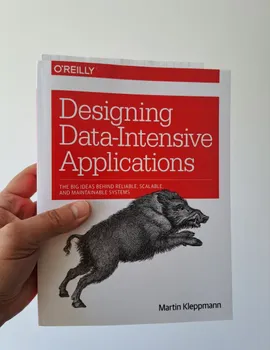
Designing Data-Intensive Applications (DDIA) by Martin Kleppmann is widely regarded as one of the best books on modern distributed systems and data architecture. It is not a book about specific technologies such as Kafka, MongoDB, or Kubernetes. Instead, it explains the fundamental principles that underpin reliable, scalable, and maintainable data systems.
What the book is about
Section titled “What the book is about”The book explores how modern applications manage data at scale.
It answers questions such as:
- How do databases actually store data?
- Why do some databases favour writes over reads?
- How do distributed databases replicate data?
- What happens when servers fail?
- How do systems stay consistent?
- How can billions of events be processed efficiently?
- How can distributed systems coordinate safely?
The book is organised around three major themes.
Part 1: Foundations of Data Systems
Section titled “Part 1: Foundations of Data Systems”This section examines how databases work internally.
Key topics:
Data Models
Different ways to represent data:
- Relational databases
- Document databases
- Graph databases
Important lesson:
The data model shapes everything else in the system.
For example:
| Model | Best For |
|---|---|
| Relational | Structured business data |
| Document | Flexible application data |
| Graph | Complex relationships |
Storage Engines
How databases physically store information.
Two major approaches:
Log-Structured Storage
Examples:
- Cassandra
- Kafka
- RocksDB
Characteristics:
- Very efficient writes
- Immutable logs
- Background compaction
B-Trees
Examples:
- PostgreSQL
- MySQL
Characteristics:
- Fast lookups
- Efficient indexing
- Mature technology
Important lesson:
Database performance is heavily influenced by its storage engine.
Encoding and Evolution
How data formats change over time.
Examples:
- JSON
- Protocol Buffers
- Avro
Key concept:
Backward compatibility and forward compatibility.
This becomes important when hundreds of services evolve independently.
Part 2: Distributed Data
Section titled “Part 2: Distributed Data”This is often considered the most valuable part of the book.
The focus shifts from single databases to distributed systems.
Replication
Replication means keeping copies of data across machines.
Benefits:
- High availability
- Fault tolerance
- Read scalability
The book explains:
Leader-Follower Replication
One server accepts writes.
Other servers replicate changes.
Used by:
- PostgreSQL replication
- MySQL replication
Multi-Leader Replication
Multiple servers can accept writes.
Advantages:
- Geographical distribution
- Better availability
Challenges:
- Conflict resolution
Leaderless Replication
Used by:
- Dynamo
- Cassandra
Characteristics:
- No single leader
- Eventual consistency
Partitioning (Sharding)
How data is spread across multiple machines.
Challenges:
- Balanced distribution
- Hot partitions
- Rebalancing
Key insight:
Scalability often depends more on good partitioning than on powerful hardware.
Transactions
One of the strongest chapters in the book.
Many developers think:
Transaction = SQL feature
Kleppmann shows:
Transactions are a mechanism for handling complexity.
Transactions help protect against:
- Partial failures
- Concurrent writes
- Data corruption
The book also explains:
- ACID guarantees
- Isolation levels
- Serializable transactions
and when these guarantees are worth the cost.
Part 3: Derived Data and Stream Processing
Section titled “Part 3: Derived Data and Stream Processing”This section becomes very relevant to modern event-driven architectures.
Batch Processing
Large datasets processed as jobs.
Examples:
- Hadoop
- Spark
Principle:
Process large volumes efficiently without requiring immediate results.
Stream Processing
Data processed continuously as events arrive.
Examples:
- Kafka
- Flink
- Samza
Key idea:
Events become the source of truth.
This concept is foundational for:
- Event-driven systems
- Real-time analytics
- Event sourcing
Data Integration
Modern systems usually contain:
- Databases
- Message queues
- Search indexes
- Data warehouses
The challenge is ensuring they remain consistent.
This section explains how data flows through an organisation.
Core takeaway
Section titled “Core takeaway”The central message of the book is:
Building data systems is primarily about managing complexity, and the most important qualities of a successful system are reliability, scalability, and maintainability.
Kleppmann argues that every data system is ultimately a collection of trade-offs.
When designing systems, you must constantly balance:
- Consistency vs Availability
- Latency vs Durability
- Simplicity vs Flexibility
- Strong guarantees vs Performance
- Centralised control vs Distributed autonomy
The book teaches that there is no universally “best” database, architecture, or distributed system design.
Instead, successful architects:
- Understand the guarantees provided by different technologies.
- Understand the business requirements.
- Choose the right trade-offs.
In short:
The goal is not to find the perfect technology. The goal is to understand the characteristics and trade-offs deeply enough to design systems that meet real-world requirements.
Why it matters
Section titled “Why it matters”This is where DDIA truly stands apart.
Most technical books teach:
- Frameworks
- Languages
- Products
Those become outdated.
DDIA teaches concepts that remain relevant regardless of technology changes.
For example:
| Technology Changes | Principle Remains |
|---|---|
| Database vendors | Replication |
| Message brokers | Event ordering |
| Cloud providers | Partitioning |
| APIs | Consistency |
| Frameworks | Fault tolerance |
The underlying principles remain the same.
Why It Matters for Modern Architects and Backend Engineers
Section titled “Why It Matters for Modern Architects and Backend Engineers”If you are building:
- Microservices
- Event-driven systems
- AI platforms
- Data pipelines
- SaaS platforms
- Cloud-native applications
you will eventually face questions such as:
- Can this service tolerate stale data?
- Do we need strong consistency?
- How should we partition data?
- What happens if the leader node fails?
- How do we replay historical events?
- How do we avoid distributed transactions?
DDIA provides the mental framework for answering these questions.
Three Ideas That Change How You Think
Section titled “Three Ideas That Change How You Think”1. Distributed Systems Are Mostly About Failure
Section titled “1. Distributed Systems Are Mostly About Failure”In a single machine, failures are uncommon.
In distributed systems, failures are normal:
- Network delays
- Packet loss
- Node crashes
- Time drift
The system must expect failure instead of treating it as an exception.
2. Consistency Is Not Free
Section titled “2. Consistency Is Not Free”Many engineers initially assume:
“I want the latest data everywhere.”
The book shows that achieving this in a globally distributed system is expensive and sometimes impossible.
This leads to understanding:
- Eventual consistency
- CAP considerations
- Consensus protocols
3. Data Is More Valuable Than Logic
Section titled “3. Data Is More Valuable Than Logic”Business logic changes frequently.
Data often lives for decades.
Therefore:
Architecture should prioritise preserving and evolving data correctly.
This is one reason event logs and immutable records are such powerful ideas.
In summary:
DDIA teaches the fundamental principles required to design reliable, scalable, and maintainable data systems by understanding the trade-offs behind storage, replication, partitioning, consistency, and distributed processing.